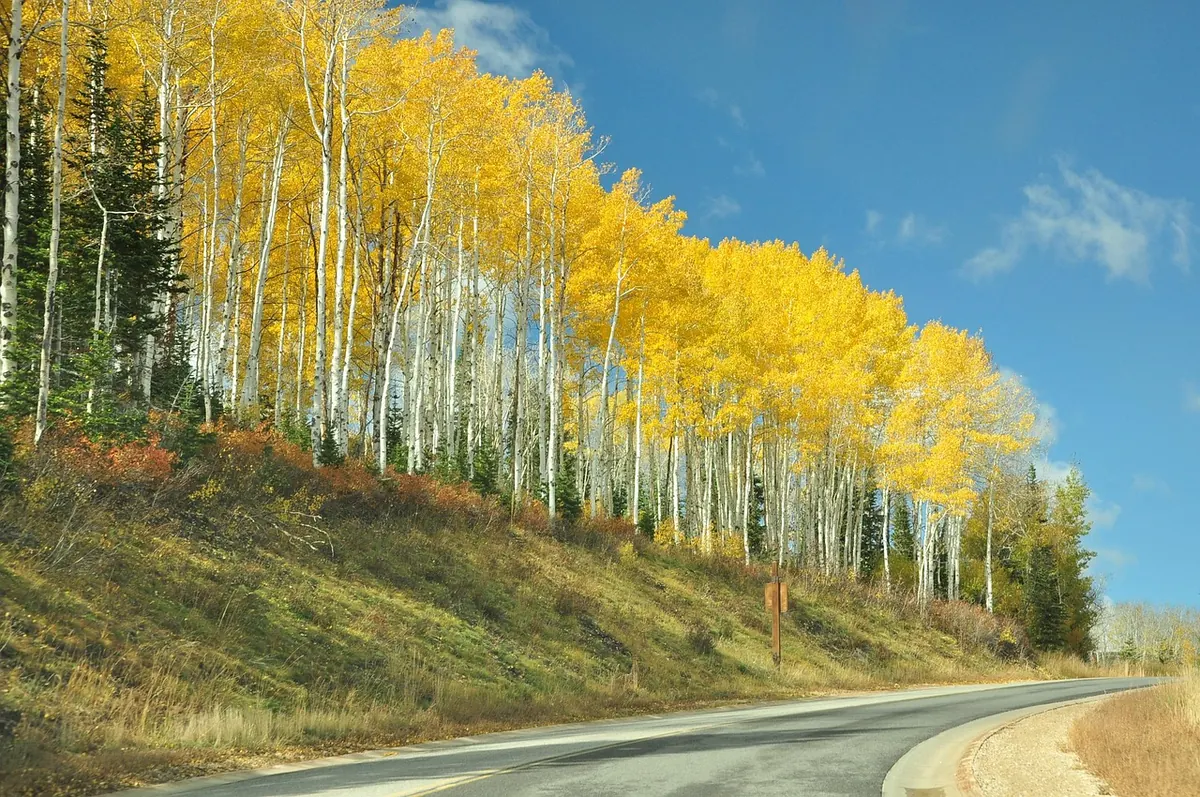

Few trees earn their place in a garden as quickly as an aspen. The leaves hang on flattened stalks, so even a light breeze sets the whole crown fluttering and rustling — a sound that carries across a garden on a still evening. Populus tremula, our native aspen, is tough, fast-growing and content on ground that would defeat fussier trees. It also suckers from its roots, which is wonderful if you want a grove and less wonderful if you plant it in the middle of a herbaceous border. Get the site right and the planting itself is simple. Here is the whole process, from choosing the spot to the first summer of watering.
Start with the site, not the tree
Aspen is a pioneer species. In the wild it turns up on disturbed ground, gravel, railway cuttings and the edges of woodland, which tells you most of what you need to know. It wants full sun — at least half a day of it — and soil that drains but doesn't dry out completely. Light shade is tolerated, though you will get a thinner tree that flutters less. Permanently waterlogged ground is the one thing it will not forgive.
The site question that matters more than any other is space. Aspen spreads by shallow roots that send up suckers, and those suckers can appear several metres from the trunk. In a lawn, this is easy: the mower deals with them. In a gravel garden, a veg patch or a tightly planted border, they become a weekly job. As a rule of thumb, keep an aspen well clear — think eight to ten metres — of house foundations, drains, soakaways, patios and block paving. If your garden is small, plant it where you can mow around it, or accept that you will be pulling suckers for years and treat that as the price of the tree.
Do not plant into a frost pocket at the bottom of a slope if you can avoid it, and avoid a spot where the tree will lean over a path you use in winter. Aspen wood is brittle in wind, and it drops small branches.
Bare-root or potted?
Both work well. The difference is timing and cost.
- Bare-root trees are lifted from the field while dormant and sold between November and March. They are cheaper, establish faster and give you more choice of native stock. Plant them the day they arrive if you can; heel them into a spare patch of soil if you cannot.
- Potted trees can be planted at almost any time of year when the ground is workable, which suits people who decide in May. They need more watering in their first season and cost more for the same size of tree. Avoid planting in the middle of a dry summer.
Whichever you choose, look for a single straight leader and a clean trunk. Reject anything with circling roots visible at the drainage holes.
Preparing the ground
Clear a circle at least a metre across, and get rid of perennial weeds properly. Couch grass, ground elder and bindweed will outcompete a young tree and are far harder to remove once it is in the ground.
Dig the planting hole two to three times as wide as the rootball but no deeper than the roots actually need. In heavy clay, a roughly square hole is better than a round one — the corners give roots somewhere to break out. Fork the base and the sides to relieve compaction.
Do not fill the hole with rich compost. On ordinary soil, backfill with the soil you dug out. If your soil is sandy or gravelly, mix in a couple of buckets of garden compost or well-rotted manure. If it is heavy clay, add grit and plant slightly proud of the surrounding level so water drains away from the collar. A quick drainage test is worth doing: fill the empty hole with water and see whether it has gone by the next morning. If it hasn't, improve the drainage before you plant.
Planting, step by step
- Soak a bare-root tree in a bucket of water for an hour or two — no longer. Water a potted tree thoroughly the night before.
- Find the soil mark on the trunk of a bare-root tree, or the top of the compost on a potted one. That line should sit level with the surrounding soil, or a fraction below. Burying the collar is the most common way to kill a young tree slowly.
- For bare-root, build a cone of soil in the base of the hole and spread the roots over it. Trim any that are too long rather than bending them round the sides.
- For potted stock, ease the rootball out and tease the outer roots loose with a hand fork. If it is a solid mat, make three or four vertical cuts down the sides with a knife.
- Backfill in stages, firming gently with your heel between layers so there are no air pockets. Do not stamp hard.
- Finish with a slight saucer-shaped depression around the trunk to catch rain.
- Water with ten to fifteen litres, slowly, even if it is raining. This settles the soil around the roots.
If you are planting a grove, space the trees three to five metres apart in odd numbers. Clumps look more natural than rows.
Staking, guards and mulch
Stake only if the tree needs it: an exposed site, a tall whip, or a bare-root tree in light sandy soil. Use a short stake driven in on the windward side so it stands about 45–60cm above ground, and tie with a soft tie in a figure of eight so the trunk can still move. Movement builds a strong trunk; a rigidly staked tree stays weak. Remove the stake and tie after two growing seasons.
Rabbits will strip bark from a young aspen and deer will browse the leader, so a spiral guard or mesh cylinder to at least 60cm is sensible in most gardens. Voles and mice gnaw at ground level, so keep grass and mulch clear of the trunk.
Mulch with five to eight centimetres of well-rotted bark or compost in a metre-wide ring, keeping it at least 10cm back from the bark. Top it up each spring. Mounded mulch against the trunk causes rot.
Watering through the first two summers
The first two growing seasons decide whether your aspen thrives or merely survives. Water deeply and less often: ten to twenty litres poured slowly at the roots once a week in dry weather, rather than a daily splash. That encourages roots downwards instead of keeping them near the surface. On sandy soil water more frequently; on clay, check before you water.
Weeds are the other big threat. A young tree with a metre of clean ground around it will grow twice as fast as one smothered in grass. Do not feed with a high-nitrogen fertiliser — it pushes soft leafy growth that aphids love and wind shreds. Aspen is built for poor soil and needs nothing added.
Expect some galled or blotchy leaves. Aspen leaf galls are common and cosmetic, and the tree carries on regardless.
A simple first-year routine
Check the tie and stake each spring and loosen the tie as the trunk thickens. Top up the mulch. Water weekly through any dry spell. In autumn, leave the fallen leaves where they land — they are the tree's own mulch. Check the guard has not begun to rub.
In winter, walk the ground around the tree and decide your suckering policy. In lawn, mow them off. In borders, trace each sucker back to the parent root and pull or cut it cleanly, or you will simply get more shoots from the same spot. Expect thirty to sixty centimetres of growth a year, more once established, and a tree that rustles in the lightest breeze long before it reaches full size.
Photo: oljamu / Pixabay