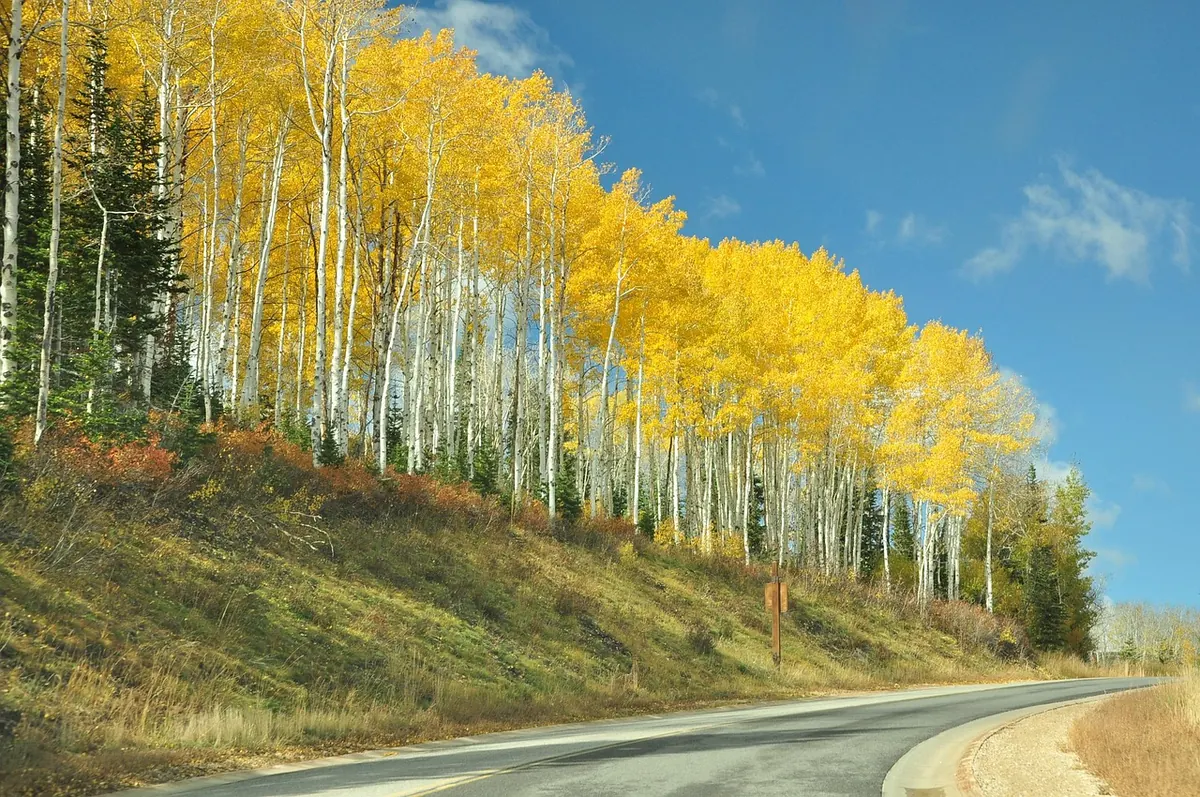

Aspen (Populus tremula) is one of those trees that rewards a second look. From a distance its pale bark and restless leaves can read like a slender birch, but stand beside a mature colony and the difference is obvious: a spread of trunks rising from shared roots, every leaf turning on a flattened stalk that trembles in the faintest breeze.
For anyone involved in woodland creation or rewilding, aspen is worth understanding properly. It is a native tree with an unusual social life, a distinctive place in the food web, and a habit of spreading in ways that need planning rather than fighting.
Why aspen earns its place in restoration
Britain's aspen resource is thin. The tree is scattered rather than common, with strongholds in the Scottish Highlands and more isolated populations through Wales, the Lake District, the Pennines and parts of southern England. Many remaining stands are small, even-aged and cut off from one another.
That scarcity is part of the attraction. Bringing aspen back into a landscape where it has been lost or reduced adds structure, leaf litter and deadwood of a kind few other native broadleaves provide. It is also quick off the mark. On decent ground, aspen grows fast enough to form the beginnings of a canopy within a decade, which matters when you are trying to shelter slower species such as oak, holly and rowan beneath it.
Clonal colonies: the trick that changes everything
Aspen is dioecious, meaning individual trees are either male or female, and both need to flower at the same time for seed to set. In Britain, viable aspen seed is uncommon. Male trees outnumber females in many populations, the seed has a very short life, and it needs bare, damp, disturbed ground to establish. Those conditions arrive rarely.
So aspen usually does something else. It sends up suckers from shallow lateral roots, producing new stems genetically identical to the parent. Over time a single seedling can become a colony of dozens or hundreds of trunks across a wide area: effectively one organism with many shoots.
What that means on the ground
- Colonies can persist for a very long time, outliving the original seed source.
- Every stem in a patch may be the same sex, so some colonies never produce seed at all.
- Roots travel sideways by several metres, often further than people expect.
- Landscape-level genetic diversity depends on how many separate colonies exist and whether they connect.
The practical consequence is simple. A scheme that plants a single source of aspen across a whole site risks creating a wood that is genetically narrow, and therefore less resilient to pests, disease and changing conditions. Mix your sources.
The biodiversity case
Aspen punches above its weight for wildlife. Its leaves feed a range of moths and sawflies, its early catkins offer pollen and nectar when little else is open, and its soft, quick-decaying wood is unusually hospitable to fungi and invertebrates that depend on deadwood. In Scotland, aspen is the host for the aspen hoverfly, a rare insect tied to sap runs and rotting aspen timber, and aspen stands are known for the lichens and bryophytes that clothe their bark.
There is a soil story too. Aspen litter is relatively nutrient-rich and breaks down faster than oak or birch leaves, feeding the soil food web quickly and gathering in hollows and against fallen trunks, where it holds moisture through dry spells. Add the light-catching pale trunks and the yellow autumn colour, and you have a tree that works hard at several levels at once.
Getting light and grazing right
Light
Aspen is a light-demanding pioneer. It will sit in closed woodland for years without spreading, and it will not regenerate in deep shade. Plant it at wood edges, in gaps, along rides and on ground that is open now but will not be sprayed or mown flat every season.
Grazing
Browsing is the single biggest obstacle. Sheep, cattle and deer will take suckers and young stems down to the ground, leaving a low, clipped bush that never becomes a tree. Fencing, or genuine deer management, is close to a prerequisite. Where you cannot exclude animals, expect to protect individual groups rather than whole fields.
Soil and position
Aspen tolerates a wide range of soils, from damp clays to lighter loams, and does best on moist but free-draining ground rather than sitting water. Give it room. Because of the suckering habit, avoid planting hard against buildings, drains, paths and neighbouring gardens, and talk to neighbours before a colony arrives on their side of the fence.
Practical steps for a first aspen project
- Survey what you already have. Walk the site in early spring and look for catkins before the leaves appear. Male catkins are grey and woolly; female catkins are green and hang loosely. Note where colonies are and roughly how big they are.
- Source local material. Ask a nursery specialising in native trees where its parent stock came from. Material of local provenance keeps the wood in character with its surroundings; unnamed imported stock rarely does. Ask the landowner before collecting anything from the wild.
- Plant in groups, not lines. Clusters of five to fifteen trees, spaced a few metres apart, mimic how aspen naturally appears and let the roots knit together as the colony forms.
- Plant in the dormant season. Bare-root transplants go in between November and March, while the tree is not in leaf.
- Protect the planting. A stock fence around a group is often cheaper and more effective than individual guards, and easier to move later.
- Keep records. Photographs from the same spot each year, plus a rough count of new suckers, will tell you more than any one-off inspection.
Judging success, and what to do next
Survival is the lowest bar. Real progress looks like suckers appearing away from the planted stems, catkins on mature trees, insect-nibbled leaves, and deadwood beginning to accumulate on the ground. Those things usually arrive gradually: expect the first obvious suckering two to five years after planting, and useful structure rather later.
If stems are being browsed, don't write the project off. Aspen is good at coming back once pressure lifts, and a root system that has been kept small above ground is often larger than it looks. Lift the grazing, wait a season, and check again. And keep the conversation going with neighbours and the wider site: aspen moves, and a colony that looks contained this year may be somewhere new in ten.
Photo: 12019 / Pixabay