
Aspen is one of those trees that sells itself: pale bark, leaves that tremble in the slightest breeze, buttery autumn colour. It is native, hardy and quick to establish. So why not use it as a privacy screen? Because aspen does not behave like a hedge. It behaves like a colony. Understanding that difference before you plant can save you years of digging suckers out of the lawn – and awkward conversations over the fence.
What aspen offers a boundary
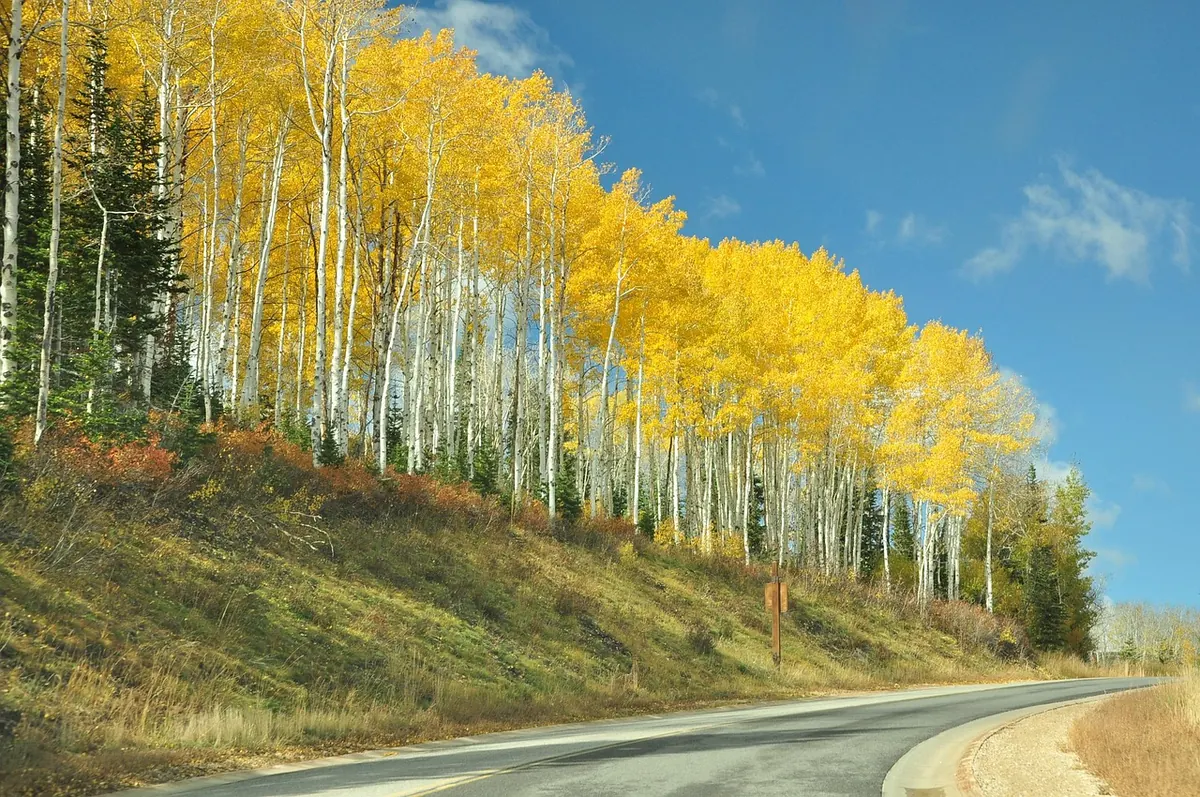
For a large garden, smallholding or rural edge, aspen has real strengths. It grows quickly, especially on moist but free-draining soil, and can form a tall, wind-filtering screen in a few seasons. The leaves rustle and flutter, which makes the tree feel alive even on a still day. In spring, catkins appear before the leaves; in autumn, the foliage turns gold. Wildlife uses it: caterpillars, aphids, birds and bees all make use of it. Because it suckers, aspen can also create a dense thicket over time, which is useful for shelter and habitat. If your priority is a natural, wildlife-friendly boundary on a generous plot, it can earn its place.
The drawbacks that matter most
The main problem is the root system. Aspen spreads by suckers – new shoots that rise from roots, sometimes several metres from the parent tree. In a lawn, they appear as unwanted stems. In a border, they compete with perennials. Near a boundary, they can cross into a neighbour's garden. Cutting them encourages more, unless you mow them consistently and accept that the colony will keep trying. A root barrier can help, but it is not a guarantee; roots can go under or around it.
Aspen is also deciduous. For four or five months of the year, it offers no privacy at all. Its branches can be brittle in wind and snow, and it is not a tree for tight, formal clipping. If you need a neat screen in a small garden, these are serious drawbacks.
Growth rate and screening performance
Aspen is fast. That is its selling point. But fast growth does not automatically equal good screening. A single aspen often has a clear trunk and a canopy that starts well above eye level, so it screens upper windows rather than ground-level patios. To get privacy from the base up, you would need a group, a multi-stem tree or underplanting with shrubs. Even then, the screen is seasonal.
Compare that with hornbeam or beech, which hold on to their dead leaves through winter, or yew and holly, which stay dense all year. Aspen is best seen as a summer screen, a windbreak or a backdrop. If you want to block a road, a neighbour's window or a passing place, it is rarely the most efficient choice.
Maintenance, suckering and boundary law
Aspen is low-maintenance only if you have space for it to spread. In a managed garden, expect to mow, cut or pull suckers regularly. Mowing a sucker does not kill the root, but repeated cutting weakens it. Do not rotovate or dig around the roots unless you want more shoots. Prune only when necessary, in late summer or early autumn, and avoid hard pruning in spring when the tree bleeds sap.
Before planting near a boundary, check for Tree Preservation Orders, conservation area rules, restrictive covenants and any local planning conditions. In the UK, high hedge legislation generally concerns evergreen or semi-evergreen hedges, but that does not remove the risk of a nuisance dispute over roots or suckers. If legal or boundary issues are involved, take professional advice.
UK alternatives for privacy screening
If aspen's suckering and bare winters rule it out, there are plenty of British-friendly options. The right choice depends on how quickly you need cover, how formal you want the result and how much trimming you will do.
For year-round privacy
- Yew (Taxus baccata): evergreen, dense and long-lived. Slow to establish, but needs little more than one cut a year once grown. All parts are toxic if eaten, so keep it away from livestock and be careful with pets and children.
- Holly (Ilex aquifolium): evergreen, spiky and shade-tolerant. Slow, but makes a solid boundary and feeds birds. Trim in late summer.
- Western red cedar (Thuja plicata): faster than yew, evergreen and responds well to clipping. It needs regular trimming to stay neat and can suffer in very dry, exposed sites.
- Cherry laurel (Prunus laurocerasus): fast and evergreen, but large-leaved and bulky. It needs hard pruning to stay within bounds and is not the best choice for a small, tidy garden.
For winter structure with less trimming
- Hornbeam (Carpinus betulus): holds dead leaves through winter, tolerates clay and wet soil, and clips well. A strong all-rounder.
- Beech (Fagus sylvatica): similar winter leaf retention, but prefers well-drained soil. Beautiful, but slower than hornbeam on heavy clay.
For native, informal boundaries
- Hawthorn (Crataegus monogyna): thorny, wildlife-friendly and good in a mixed hedge. Deciduous, but dense.
- Blackthorn (Prunus spinosa): suckers, so treat it like aspen with care, but excellent for nesting birds.Photo: 652234 / Pixabay