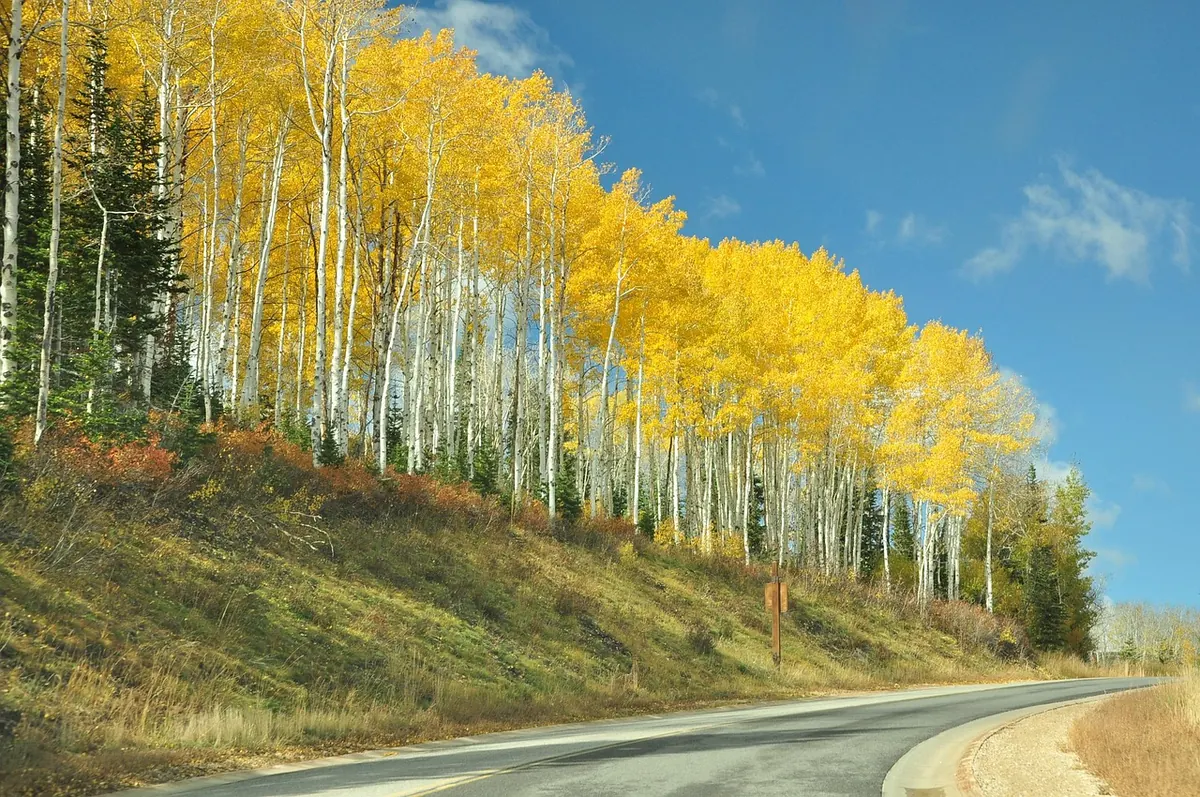

Aspen has a lot going for it: the whisper of trembling leaves, good autumn colour, and a willingness to grow on ground where plenty of other trees give up. It also has a strong will of its own. Most of the problems gardeners run into come from one mistaken assumption — that aspen will behave like a tidy ornamental. It won't. Here are the mistakes that come up again and again, and how to sidestep them.
Planting Too Close to Buildings, Drains and Boundaries
Aspen is a coloniser. It spreads by root suckers, and those roots travel well beyond the canopy. A tree planted a couple of metres from a patio, a drainage run or a neighbour's fence can look charming for three years and then become somebody else's problem: shoots pushing up through gravel, roots lifting lightweight paving, and new growth appearing on the wrong side of a boundary.
Before you dig, walk the site and ask yourself where you would be happy to see aspen shoots in ten years' time. If the answer is "nowhere", either give the tree room measured in tens of metres from anything you would rather it didn't reach, or accept that you will be managing it for as long as it lives. Aspen is not a tree to plant in a tight courtyard and forget about. Keep it well away from drains, foundations, retaining walls and services, and if you are unsure about underground pipes, check with the relevant utility before planting.
Treating Root Suckers as a Minor Detail
Suckers are not a fault in the tree, they are how aspen works. A single tree is really the visible part of a spreading root system, and every bit of root disturbance — mowing, digging a border, laying a path — tends to trigger more shoots. The common error is to snip the tops off once a year and hope for the best. That simply encourages denser regrowth.
What actually works:
- Mow or strim them in a lawn, repeatedly through the growing season. Consistent cutting exhausts the shoots far better than an occasional tidy-up.
- Cut them off cleanly below soil level with a spade where mowing isn't possible, and do it while they are still soft and young.
- Install a root barrier at planting time if you want one tree and no thicket. It needs to be a proper vertical barrier, deep enough to matter, and it needs checking.
- Decide whether you want a grove. A spreading aspen stand can be beautiful on a larger plot. The mistake is wanting one tree and getting a colony by accident.
Ignoring Drainage and Soil Compaction
Aspen copes with a fair range of soils, from damp to reasonably dry, but it dislikes ground that sits waterlogged through winter and it dislikes compaction. On heavy clay, or in a spot where water collects, the roots struggle, growth slows, the crown thins from the top down and the tree becomes more prone to canker and dieback.
Test the site in winter. Dig a hole roughly the depth of a spade and a half, fill it with water, and see how long it takes to drain. If it is still full the next morning, plant somewhere else — or build a raised mound of soil and plant onto that so the roots sit above the water table. Break up the sides of the planting hole rather than smoothing them with the spade, and resist the urge to fill the hole with rich compost in heavy clay; that creates a sump that holds water around the roots. Mulch after planting, but keep it clear of the trunk.
Skipping Wind Protection, Then Staking Badly
Young aspen whips are flexible, but their roots are not yet anchored. On an exposed site, wind rock loosens the tree in the ground, tears the new roots that are trying to establish, and lets water pool at the base. A temporary screen, a nearby hedge or the lee of an existing windbreak will make a real difference for the first two or three seasons.
Staking is where people often do more harm than good. Tall stakes with tight ties hold the trunk rigid, and the tree never develops the movement it needs to build a strong trunk. Use a short stake or two short stakes with flexible ties that allow some sway, check them each spring, and remove them once the tree is holding itself steady.
Choosing the Wrong Aspen for a UK Site
Populus tremula, the native European aspen, is the safest choice for most British gardens and larger plots. It is adapted to our damp, windy, mild-winter climate and it supports a good range of wildlife. North American quaking aspen (Populus tremuloides) is widely sold and often disappointing here, being more prone to leaf rust and canker in our conditions. If a plant is labelled simply "aspen", ask which species it is. Buy from a nursery that names it properly rather than guessing.
Planting at the Wrong Time, or at the Wrong Depth
Bare-root aspen is best planted between late autumn and early spring while it is dormant, on a mild day when the ground is neither frozen nor waterlogged. Container-grown trees can go in for much of the year, but avoid a midsummer heatwave. Two planting errors cause most early failures:
- Planting too deep. The root collar — the flare where the trunk widens into the roots — should sit at or just above soil level, not buried.
- Leaving the rootball intact. Tease out or slice through circling roots before planting, or they will keep circling and the tree will never anchor properly.
Water thoroughly after planting and keep watering through the first two summers in dry spells. A tree that dries out in its first August rarely recovers its momentum.
Underestimating Size, Light and Lifespan
Aspen is a pioneer species. It grows quickly, it wants full sun, and it does not live for centuries. In shade it stretches, leans and suckers poorly, so a spot that only gets a few hours of sun is a poor investment. Given room and light, it can become a substantial tree, and a substantial tree close to a building or a road needs professional management rather than a hopeful prune with a handsaw. Plan for the fact that your aspen will one day need replacing, and think now about what grows alongside it.
Getting It Right From the Start
Almost every aspen problem is easier to prevent than to fix. Choose the native species, plant it bare-root in dormant season, keep the root collar at soil level, and water it properly for the first two summers. Give it sun and space. Then decide, deliberately, whether you are growing a specimen or a grove — because aspen will make that decision for you if you don't.
If suckers are already arriving where you don't want them, start cutting them back regularly this season rather than waiting, and get advice from a qualified arborist before removing a mature tree near buildings, drains or boundaries.
Photo: Greta Hoffman / Pexels