

Let’s skip the fluff. You’re here because you want a real edge in iGaming—whether you’re spinning slots, grinding poker tables, or trying to beat the bookies. The industry is worth over $100 billion globally, and with that kind of money flying around, it’s easy to get lost in gimmicks. This article cuts through the noise. I’ll share concrete strategies, numbers, and hard-earned lessons from years of navigating casinos, sportsbooks, and card rooms. No hype, no magic systems—just what actually moves the needle.
Slots: Why Volatility Matters More Than RTP
Most players obsess over Return to Player (RTP)—that 96% figure plastered on game info pages. But here’s the truth: RTP is a long-term average over millions of spins. In a single session, volatility (variance) dictates your experience. A low-volatility slot like Starburst (RTP 96.1%) pays small, frequent wins. A high-volatility beast like Bonanza Megaways (RTP 96%) can eat 200 spins before a single bonus. Neither is “better”—they serve different goals.
If you want to stretch a $50 bankroll for a few hours, stick to low volatility with small bets. If you’re chasing a 500x payout, high volatility is your only shot. But don’t just guess—check the game’s hit frequency. Tools like SlotCatalog or the developer’s own spec sheet list it. A 25% hit frequency means you’ll win something on one in four spins. Below 20% and you’re in drought territory.
Pro tip: Never play a slot with an RTP under 95% unless you’re getting a massive bonus. Some land-based and low-tier online casinos sneak in 92% games. That extra 3% house edge compounds fast. Over 1,000 spins at $1 each, a 92% RTP slot costs you $80 versus $40 for a 96% game. Same entertainment, double the bleed.
Poker: Position Is King, But Bet Sizing Wins Wars
Every poker book tells you to play tight-aggressive and value position. That’s table stakes. The real differentiator at micro and low stakes is bet sizing. Most recreational players bet the same amount regardless of board texture or hand strength. You can exploit that relentlessly.
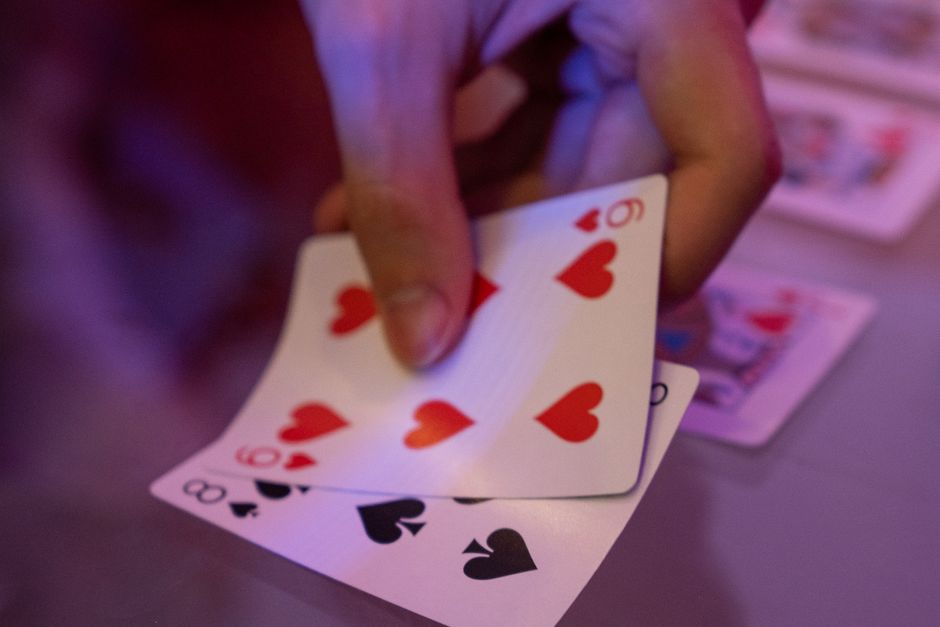
Consider this: In a $1/$2 cash game, a player raises to $6 preflop. You call on the button with 8♠7♠. Flop comes 6♥9♦K♣—you’ve got an open-ended straight draw. Your opponent bets $10 into a $15 pot. That’s a 67% pot bet. If they had top pair (Kx), they’d usually bet smaller (40-50%) to keep you in. A big bet like that often signals weakness or a draw. You can raise to $35 and win the pot right there 60% of the time. Even when called, you have eight outs (any 5 or 10) plus backdoor flush potential.
Track your opponents’ bet sizing for one session. You’ll spot patterns within an hour. One guy always bets half-pot with draws, full pot with sets. Another min-bets with monsters to induce raises. Adjust accordingly and your win rate jumps.
Also, stop limping. In a typical 6-max game, limping from early position costs you 0.5 big blinds per hand in expected value. Over 1,000 hands, that’s $500 at $1/$2. Raise or fold. Simple. สล็อตเว็บตรง goes into the finer points.
Sports Betting: Line Shopping and Closing Line Value
If you’re not line shopping, you’re leaving money on the table. Period. The difference between the best and worst odds on an NFL spread can be 1.5 points. On a $100 bet, that’s $15 in implied value. Over 200 bets a year, that’s $3,000.
Use a tool like OddsJam or just open accounts at three or four reputable books (DraftKings, FanDuel, BetMGM, Caesars). Compare lines for every bet. It takes 30 extra seconds.
But the real sharp metric is Closing Line Value (CLV). If you bet the Chiefs -3 early in the week, and the line closes at -4.5, you got CLV. That means the market moved in your favor. Consistently beating the closing line is the single best predictor of long-term profitability. Professional bettors aim for 55% CLV. If you’re getting 60%, you’re crushing it.
How to get CLV? Bet early on injury news, weather, or public overreactions. For example, after a QB is ruled out, the line often overadjusts by 1-2 points. Fade the panic. Also, avoid parlays and teasers—they’re sucker bets with 20-30% hold for the house. Stick to straight bets or simple two-leg ones if you must.
Bankroll Management: The 5% Rule and Why It Fails
You’ve heard “never bet more than 5% of your bankroll.” That’s decent advice for beginners, but it ignores variance. A 5% bet on a high-volatility slot with 100x swings can still bust you. Here’s a better framework:
- Slots: 0.5% to 1% per spin. With a $1000 bankroll, bet $5–$10. That gives you 100–200 spins to hit a bonus.
- Poker cash games: 5% of bankroll as a buy-in. $2000 bankroll = $100 buy-in at $0.50/$1.
- Tournaments: 2% max per buy-in. $2000 bankroll = $40 buy-ins. Play 20–30 of those before moving up.
- Sports betting: 1–2% per straight bet. $2000 bankroll = $20–$40 per game.
Also, separate your bankroll from your life money. If you deposit $500 on Friday and lose it, don’t redeposit Saturday. That’s not a bankroll—that’s a leak. Track every bet in a spreadsheet. I use a simple Google Sheet with columns: date, game, stake, odds, result, CLV. After 500 bets, you’ll know exactly where your edge is.
Bonuses and Promotions: Read the T&Cs Twice
Welcome bonuses look juicy—100% up to $500, 50 free spins. But the devil is in the wagering requirements. A 40x bonus with a 30-day expiry is brutal. Example: You get a $100 bonus with 40x wagering. You need to bet $4,000 before withdrawing. If you play a 96% RTP slot, the house edge is 4%. Expected loss on $4,000 is $160. So your $100 bonus actually costs you $60 in expected value. Not free money.
Look for low wagering (20x or less), no max cashout limits, and games that contribute 100% to wagering. Avoid bonuses that exclude slots or only count 10% of your blackjack bets. And never take a bonus if you plan to play poker—most casinos exclude poker from wagering entirely.
iGaming isn’t about luck—it’s about decisions. The slots player who understands volatility, the poker player who exploits bet sizing, the bettor who shops lines—they all share one trait: they treat gambling as a skill. You won’t win every session. Nobody does. But over 10,000 hands or 1,000 spins, the math tilts in your favor if you plug the leaks. So next time you log in, ask yourself: am I making a +EV decision, or just donating? The answer separates the tourists from the sharps.