
Most people who lose money gambling don't lose it because they're unlucky. They lose it because nobody ever bothered to explain the math to them. They sign up for a casino, click the shiny slot with the biggest jackpot, and assume their chances are roughly equal to anyone else's. That assumption costs them thousands of dollars over a lifetime of play. The truth is messier, more interesting, and frankly more useful: every game in the iGaming world has a built-in percentage that grinds against you, and the only real skill is learning how to pick battles you can actually win.
House Edge Is Not a Scary Word, It's a Budget Tool
Every casino game carries a house edge, which is simply the mathematical advantage the operator holds over the player on every single bet. It doesn't mean you lose every time. It means that over thousands of hands or spins, the house will retain a predictable slice of the total money wagered.
Here is what that slice actually looks like across common games:
- Blackjack with basic strategy: around 0.5% house edge
- Baccarat betting on banker: roughly 1.06%
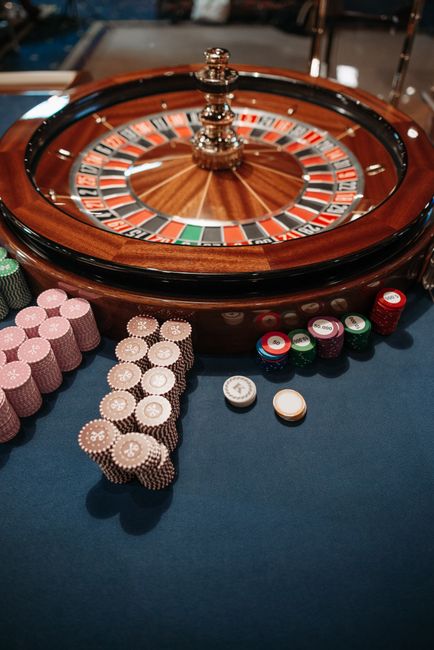
- European roulette: 2.7%
- American roulette: 5.26% (the extra zero is brutal)
- Slots: typically 2% to 10%, often closer to 8% on penny machines
Notice something? Slots sit at the wrong end of that list. Yet slots generate somewhere between 60% and 80% of casino revenue worldwide. That's not a coincidence. The games with the worst odds are the most popular because they're the most accessible, the most visually stimulating, and the least demanding. You press a button, bells ring, dopamine fires. Nothing about that experience screams "you are slowly losing 8 cents per dollar."
The practical takeaway is simple. If your goal is entertainment with the slowest possible bleed, blackjack and baccarat are dramatically better value per hour than slots. If you love slots, fine, but go in knowing you're paying for the show.
Why Slot Volatility Matters More Than RTP
Every slot page screams its RTP (return to player) percentage. "96.5% RTP!" as if that number alone should convince you. RTP is important, but volatility is the number that actually determines whether you'll enjoy your session. You will find a helpful summary at TX88.
Think of RTP as the long-term average and volatility as the shape of the ride getting there.
- Low volatility slots pay small amounts frequently. You can play for hours on a modest bankroll. Think Starburst-style games.
- Medium volatility balances frequency and size. This is where most modern titles live.
- High volatility slots can go 200 spins without a meaningful win, then dump 500x your stake in a single hit. Think Megaways titles or anything branded as "max win 50,000x."
A 96.5% RTP slot with extreme volatility will obliterate a $50 bankroll in fifteen minutes if you're betting a dollar a spin. That same $50 on a low-volatility game at 96% RTP might stretch into a four-hour evening. Same theoretical return, completely different lived experience. Volatility, not RTP, decides whether you actually get to enjoy the money you allocated.
Poker Is the One Game Where You Can Beat the House
Here's the part of iGaming that serious players get excited about: in poker, the house takes a rake, not a stake. You are not playing against the casino. You are playing against other humans, and the casino simply skims a small percentage of each pot for hosting the table. That changes everything about the math. TX 88 offers a practical breakdown of the topic.
In a cash game with a 5% rake capped at $3, a skilled player can genuinely extract profit over the long run. A losing player can't. Poker is the only mainstream gambling format where long-term winning is mathematically possible because your edge comes from opponents' mistakes, not from a fixed negative expectation.
If you're serious about poker, prioritize these in order:
- Position. Acting last gives you more information than everyone else.
- Bankroll management. Never sit with more than 5% of your total roll in a single buy-in.
- Game selection. A mediocre player at a soft table beats a great player at a shark tank every time.
- Mental discipline. Tilt costs more money than any bad beat.
The uncomfortable reality is that most poker players are net losers, because most players are not actually studying the game. They're playing cards, not poker. The gap between those two things is enormous.
Bonuses Are Marketing, Not Free Money
Welcome bonuses are advertised with dollar signs the size of billboards, but the terms and conditions are where the real story lives. A 100% match up to $500 with a 40x wagering requirement on slots means you need to wager $20,000 before you can withdraw a single dollar of that bonus. At a 4% house edge, that's an expected loss of $800 to unlock $500.
That's not a bonus. That's a trap with a bow on it.
Before claiming anything, always check:
- Wagering requirement multiplier (lower is better, anything over 35x on slots is rough)
- Game weighting (often slots count 100%, roulette 10%, blackjack 5% or 0%)
- Maximum bet while wagering (often just $5, violating it forfeits everything)
- Time limit (30 days sounds generous until you realize you can't clear it)
- Max cashout cap (some bonuses cap winnings at $100 no matter how much you win)
A good bonus is one with low wagering, high or unlimited cashout, and reasonable time. Those exist, but they are the exception. Read the terms like a contract, because that's exactly what they are.
Bankroll Management Is the Only Strategy That Never Fails
You cannot control variance. You cannot predict spins or flops or river cards. But you can control how much money you expose to variance, and that single variable determines whether gambling stays entertaining or turns into a problem.
A simple framework that works across all games: separate your gambling money from your life money, decide the number before you log in, and treat a session as over when that number hits zero. No reloading. No "one more deposit." Set unit sizes so a bad session is survivable, and never chase losses with money that wasn't budgeted for it.
This isn't a moral lecture. It's the same logic a professional investor uses with position sizing. The edge you have as a player, whatever small one might exist in poker or a promotional advantage, only matters if you survive the swings long enough for it to play out. Players who go broke don't get to realize their edge.
The iGaming world offers genuine entertainment, occasional genuine skill, and plenty of genuinely bad deals dressed up as opportunities. The players who enjoy it longest are the ones who understand that the games are designed with a mathematical structure, and that their job is to navigate it intelligently rather than to beat it emotionally. Know the edge. Know the volatility. Read the bonus terms. Manage the bankroll. Everything else is noise.