

Walk into any online casino lobby and you'll see a wall of flashing graphics: leprechauns, Egyptian gods, fruit machines with enough neon to light a small city. It's easy to pick a game because the artwork looks fun. Bad idea. If you care about how long your bankroll actually lasts, the single most important number on that screen is one almost nobody clicks on — the RTP, or return to player percentage.
Here's the uncomfortable truth most players learn the hard way: two slots sitting side by side, with identical bets and identical volatility, can drain your balance at wildly different speeds. The difference isn't luck. It's built into the math, and it's published in plain sight if you know where to look.
What RTP Actually Means (Without the Marketing Spin)
RTP is the theoretical percentage of all money wagered on a game that gets paid back to players over the long run. A 96% slot returns 96 cents for every dollar staked, on average, across millions of spins. The casino keeps the other 4% as its edge.
That phrase — over the long run — is where people get confused. RTP is not a promise you'll get 96% back in a session. You could hit a 500x multiplier on spin number three and walk away with 1,000% profit, or grind for two hours and lose everything. RTP describes the mathematical average of an infinite number of spins, not your Tuesday night.
Still, it matters enormously. Consider two players each wagering $10,000 over a year on slots. One plays a 94% game, the other a 96.5% game. Expected losses: $600 versus $350. Same entertainment, same time spent, nearly double the cost. That gap is the entire argument for checking RTP before you spin.
RTP Numbers Worth Memorizing
Different game categories have very different house edges, and knowing the typical ranges tells you instantly whether a game is player-friendly or a grinder. This is explained well on HELLO88.
- Online slots: usually 94% to 97%. Anything below 95% is on the stingy side; 96%+ is solid.
- Blackjack (basic strategy): around 99.5% with favorable rules, making it the best-value table game for disciplined players.
- Baccarat (banker bet): roughly 98.9%, assuming no commission-free gimmicks skewing the math.
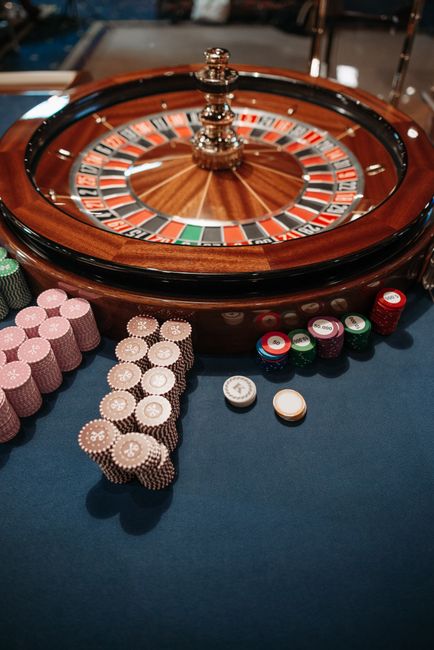
- European roulette: 97.3%, thanks to the single zero. American roulette drops to 94.7% because of that extra double zero.
- Video poker (Jacks or Better, optimal play): up to 99.5%, but only if you actually play the strategy correctly.
- Keno and most scratch-style instant games: frequently 90% or below. Fun, but expensive fun.
Notice the pattern: the more skill a game rewards, the tighter the house edge tends to be. That's not a coincidence. Casinos can afford generous math on games where most players give some of it back through mistakes.
The Trap of Volatility: Why High RTP Isn't Everything
A 96% slot with extreme volatility can feel far worse than a 94% slot with low volatility. Volatility (sometimes called variance) describes how the payouts are distributed — big and rare, or small and frequent.
High-volatility slots might pay out 60% of their RTP in a handful of monster wins and dribble the rest out in tiny amounts. Low-volatility games spread payouts more evenly, so your balance slides downhill gently instead of cliff-diving.
Practical rule: match volatility to your bankroll and temperament.
- If you're playing with $50 and want an hour of entertainment, pick low or medium volatility at 96%+.
- If you have a bigger bankroll and enjoy chasing jackpots, high-volatility games are fine — but size your bets at 1% of bankroll or less per spin.
- Never chase losses on a high-volatility slot you don't understand. Those long dry spells are baked in, not a sign a win is "due."
Poker and Betting: Where the Math Changes Shape
Slots are pure chance. Poker and sports betting are different animals because skill moves the needle dramatically.
In poker, you're not playing against the house's edge — you're playing against other players, minus a rake (typically 5% of the pot, capped at $3 in many cash games). A skilled player can be profitable over thousands of hands because the rake is a modest tax, not a fixed loss. A weak player donates steadily. The variance is brutal in the short term: even a strong player can lose for weeks in tournaments where the field is huge and payouts are top-heavy.
In sports betting, the bookmaker's margin (the vig) sits around 4% to 5% on standard two-way markets — meaning a -110 line on both sides. Beating that consistently requires genuine edge, not hunches. A 55% win rate against -110 odds is roughly break-even after the vig; you need to clear that comfortably to profit long term.
How to Spot a Bad Game in Ten Seconds
Most regulated casinos are legally required to publish RTP data, usually via a small "i" icon or a menu link. Here's what to check before you commit real money:
- Look for the RTP percentage on the game's info screen. If you can't find it, that's a red flag.
- Compare multiple games in the same category. A 93% slot next to a 96.8% slot is an easy choice.
- Check volatility separately — it's often listed as a 1-5 scale or labeled low/medium/high.
- Beware of "buy feature" options that change the effective RTP. In some games, the bonus buy has a materially lower RTP than base spins.
- For table games, look at the rule variations. Single-zero roulette beats double-zero, and 3:2 blackjack payouts beat 6:5.
What This Means for Your Bankroll Strategy
Understanding RTP and variance won't turn a losing player into a winning one overnight. No slot strategy does that. What it will do is stop you from donating money at rates you never agreed to. Anyone weighing up options should see HELLO 88.
The average player loses somewhere between 3% and 8% of total wagers over time. Playing tighter games at 96%+ instead of loose ones at 94% can nearly halve your long-run cost for the exact same entertainment. Add sensible bet sizing — 0.5% to 1% of bankroll per spin — and you'll get far more play time out of the same deposit.
The real edge in iGaming isn't a secret system or a lucky charm. It's treating the numbers as part of the experience, not something to ignore while you chase the theme song. Check the RTP. Respect the variance. Bet like the math is real, because it is.