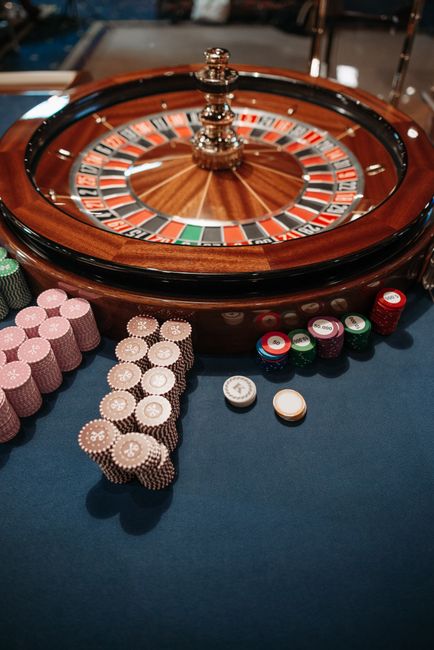


Ask ten slot players what RTP means and you'll get ten different answers, most of them wrong in interesting ways. Some believe a 96% RTP machine "owes" them money after a cold streak. Others think RTP is a monthly target the casino adjusts when profits dip. Neither is true, and misunderstanding this single number is probably the most expensive mistake a casual player can make. Let's fix that.
RTP Is a Long-Run Average, Not a Promise
Return to Player is the theoretical percentage of all wagered money a slot pays back over millions of spins. A 96% RTP game returns 96 units for every 100 wagered — on average, over an enormous sample size. That last part is where people go wrong.
Here's a concrete example. Drop $100 into a 96% RTP slot and spin at $1 per spin. The theoretical loss is $4 — but you will almost never finish a session exactly $4 down. You might be up $60, down $100, or somewhere in between. Variance is the entire experience. RTP is the tide; variance is the waves. Over 10,000 spins, your actual return will drift toward 96%. Over 200 spins, it could be anything.
A quick sanity check on how thin that house edge really is:
- A 96% RTP slot keeps $4 per $100 wagered
- A 94% RTP slot keeps $6 per $100 wagered
- On $500 of wagering, that's a $10 difference — small per session, brutal over a year
Two percentage points doesn't sound like much. It compounds fast. If you wager $20,000 a year (roughly $55 a day), the gap between 94% and 96% is $400 annually.
Where Casinos Actually Hide the Edge
Every regulated market publishes RTP somewhere, but the number you see online isn't always the number you get. Three traps worth knowing:
- RTP ranges. Some providers ship a slot with selectable RTPs — often 94%, 96%, and 97%. The same game can pay differently depending on the operator's configuration. Jackpot-style slots and some NetEnt titles are notorious for this.
- Jackpot contributions. Progressive slots often shave 1–2% off base-game RTP to fund the jackpot. That tax is only worthwhile if you're actually chasing the big one, and the odds of hitting it are a separate, uglier calculation.
- Bonus wagering. A 97% RTP slot paired with 40x wagering requirements on a bonus is functionally worse than a 96% slot with no bonus. Always read the terms, not just the RTP.
Poker works differently. In a cash game, the house takes a rake — typically 5% capped at $3 to $5 at low stakes. There's no hidden RTP; the cost is upfront and per-hand. That transparency is one reason strong poker players can actually beat the game, while no one beats a slot machine long-term. For a closer look, สล็อตเว็บตรง has helpful details.
Volatility: The Number RTP Doesn't Tell You
RTP is the destination; volatility is the road. A high-volatility slot might pay 96% RTP but deliver 90% of that return through rare 500x wins. A low-volatility slot pays 96% via frequent small hits. Same number, radically different sessions.
High volatility slots suit players with bigger bankrolls who can stomach 300-spin droughts. Low volatility suits small budgets and long sessions. If you have $50 and want two hours of play, a high-variance Megaways title is the wrong pick — not because the RTP is bad, but because your bankroll can't survive the swings.
A rough bankroll rule: multiply your average bet by 100 for low volatility, 200 for medium, and 300+ for high. A $0.50 bettor on a high-variance slot needs at least $150 to have a reasonable shot at a session with real playtime.
Reading the Numbers Like a Pro
Before you spin a single time, do a 30-second check:
- Find the RTP in the game's help file or info menu. Anything below 95% is a red flag for casual play.
- Check the volatility rating — most providers label it low, medium, or high.
- Note the max win and hit frequency if published. A 0.5% hit frequency means 199 dead spins per win, roughly.
- For poker, check the rake structure and whether the room offers rakeback or rewards that offset it.
A 96.5% RTP, medium-volatility slot with a 20,000x max win is a genuinely fair product for a recreational player. A 92% RTP, high-volatility game is a money shredder dressed up in neon.
The One Insight Most Players Miss
You cannot change RTP. You can only choose which game to sit at and how much to bet. That's it. No system, no pattern, no "due for a hit" logic changes the math. The machine has no memory of your last ten spins.
What you can control is meaningful:
- Game selection. A 2% RTP improvement is free money, assuming equal volatility.
- Bet sizing. Smaller bets stretch bankroll and reduce variance exposure.
- Session length. The longer you play, the closer your results converge to the house edge. Short sessions are dominated by luck; long sessions are dominated by math. There's a sweet spot.
- Bonus terms. A clear 96% RTP game with no wagering beats a 97% game with 50x requirements every time.
Treat every session as entertainment spend, not an investment. The moment you're playing to recover losses, you've stopped playing the game and started playing yourself.
The Bottom Line
Slots and casino games are engineered products with published mathematical edges. That's not cynicism — it's clarity. Understanding RTP, volatility, and bonus terms turns you from a player reacting to random outcomes into someone making informed choices about where to park your money and how long to stay. The house edge is real, but so is the difference between a 94% game and a 96.5% game. Over a year of casual play, that gap is a nice dinner, a weekend trip, or a much bigger bankroll. Pick accordingly.